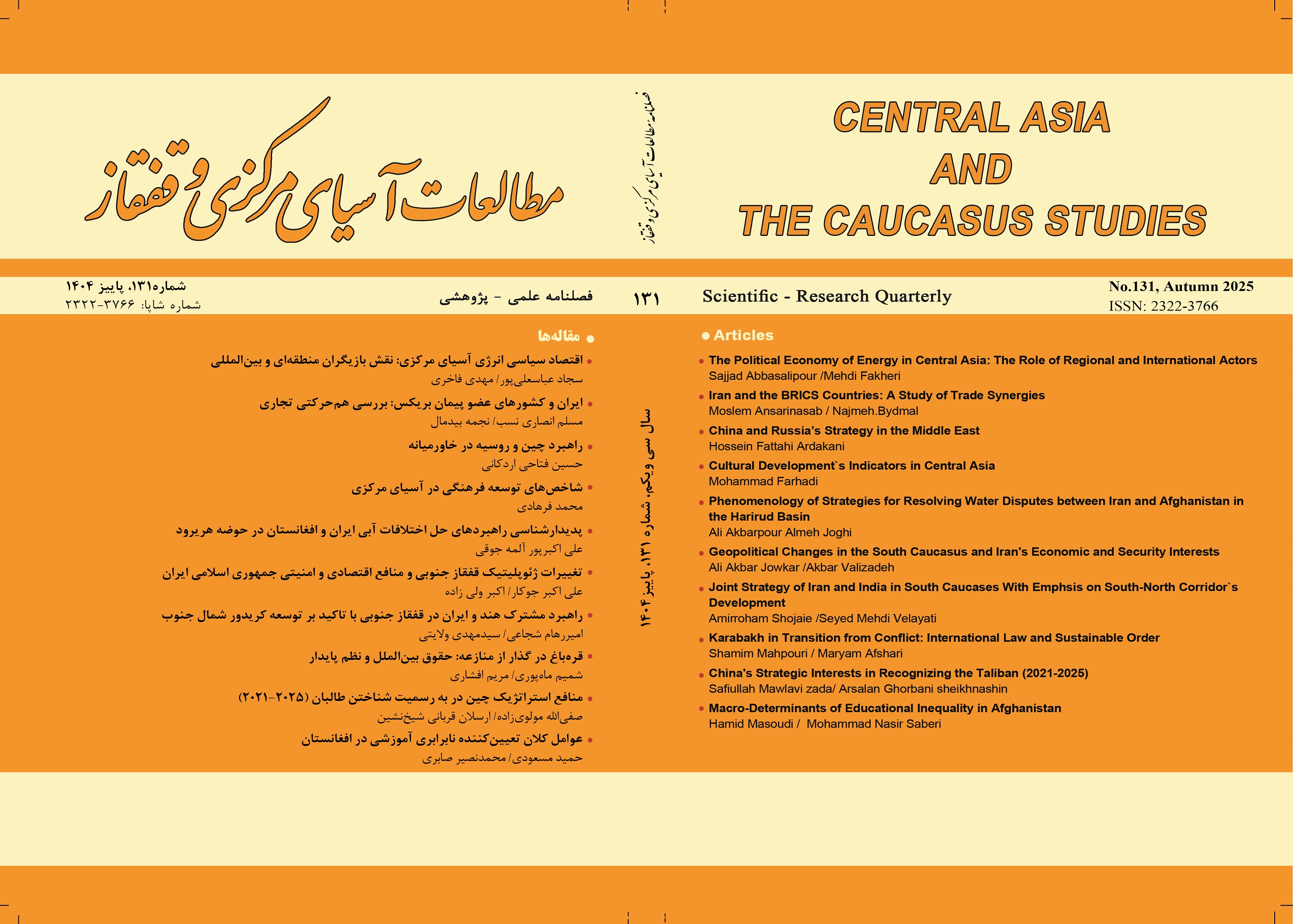
Karabakh in Transition from Conflict: A Legal Analysis of Post-War Challenges and Pathways to a Sustainable International Order

Document Type : Research Paper

Authors

1 Faculty member, Department of Law, Damavand branch, Islamic Azad university, Damavand, Iran

2 Department of International Law, Faculty of Law, Islamic Azad University Central Tehran Branch,Tehran, Iran

Abstract
The Karabakh conflict raises a key question: how can the tension between the principles of territorial integrity and the right to self-determination be resolved within the framework of international legal order in the post-war era? This study, relying on a documentary method based on binding international instruments and UN reports, and a comparative approach inspired by successful legal models such as the Aland Agreements, the Dayton Accords, and the Northern Ireland peace process, seeks to develop a comprehensive legal framework for achieving transitional justice, compensation for material and psychological damages, and protection of minority rights under the umbrella of public international law, human rights law, and international humanitarian law. The central hypothesis is that establishing a balance between Azerbaijan’s territorial sovereignty and the protection of affected communities through international monitoring and regional cooperation can lead to a sustainable legal order in the region. Findings indicate that post-war developments have revealed challenges such as human rights violations, the necessity of international accountability mechanisms, and a lack of intercommunal trust. This study underscores the importance of international oversight, the development of compensation mechanisms, and the implementation of approaches for consolidating lasting peace, concluding that the realization of these goals requires strategic political commitment from the parties and firm support from the international community.

Keywords

Subjects