Document Type : Research Paper
Authors
1
Department of International Relations, Faculty of Humanities, Tarbiat Modares University, Tehran, Iran
2
Department of International Relations. Faculty of Humanities. Tarbiat Modares University. Tehran. Iran
10.22034/ca.2026.2086429.1988
Abstract
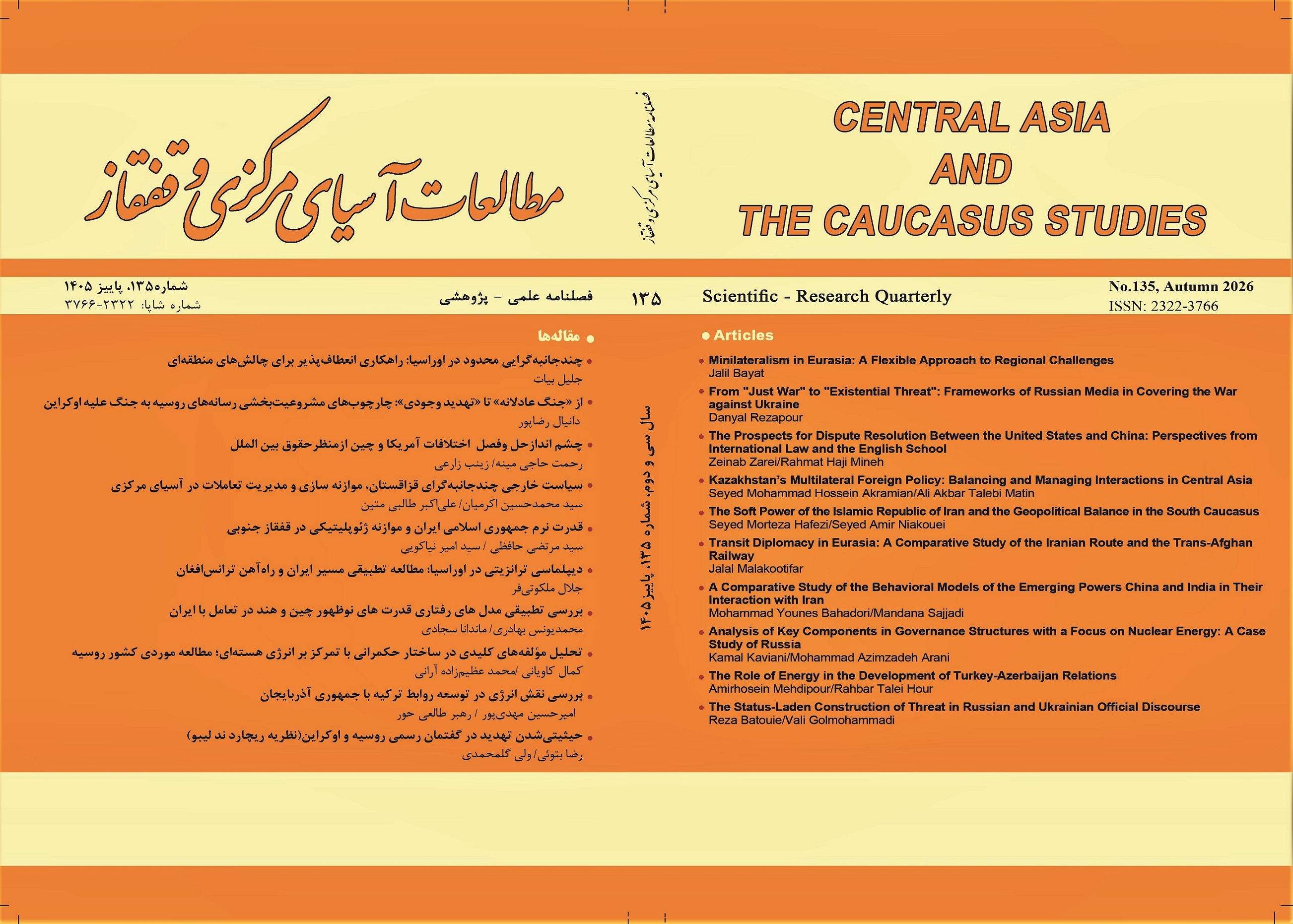
This study examines how official Russian and Ukrainian discourse transforms material and security-related threats into status-based threats through historical and identity narratives, thereby rendering compromise susceptible to negative framing. Drawing on qualitative document analysis and directed thematic analysis, the study examines 50 official Russian and Ukrainian documents published between 2014 and the end of 2022. Its analytical framework combines Richard Ned Lebow’s Cultural Theory of International Relations with the concepts of thymos, status, recognition, and dignity. The findings indicate that, in both discourses, historical narratives and self/other boundary-making are intertwined with claims to status and recognition; in some documents, material threats are further linked to identity, sovereignty, survival, and the collective future. Under such conditions, compromise or concession may be framed through the language of surrender, betrayal, appeasement, or humiliation, while confrontational policies are legitimized as defensive, moral, or historically necessary. Evidence relating to ceasefires, negotiations, and political settlements, however, demonstrates that this pattern is neither linear nor deterministic. Rather than identifying the causes of war or the concealed motives of decision-makers, the article analyzes the justificatory logic and meaning-making mechanisms of official discourse.
Keywords
Subjects