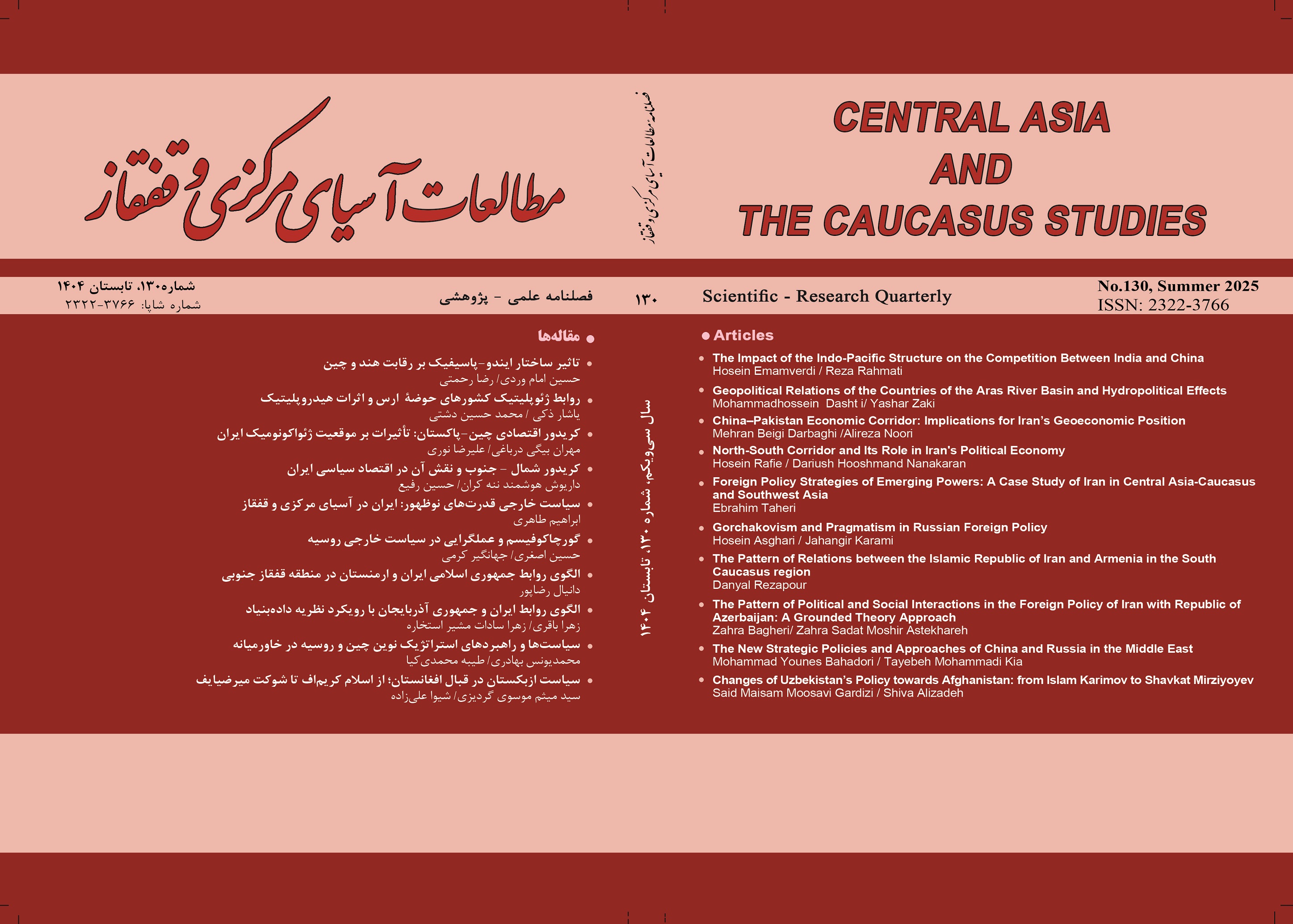
The purpose of this article is to analyze the impacts of the implementation of the (CPEC) on Iran's geo-economic position. CPEC, one of the major regional infrastructure projects under the Belt and Road Initiative, includes an extensive network in three main areas of infrastructure, energy, and economic development. Geographically, CPEC is not just a bilateral project that will strengthen relations between China and Pakistan, promote economic development in Pakistan, and enhance China's regional influence in South Asia, but it also has significant regional dimensions and impacts. In terms of subject matter, this project is not necessarily economic and has political, social, and even security dimensions. In this text, CPEC will have impacts on Iran's regional geo-economic position, which will be particularly noticeable in the two areas of energy (gas exports) and infrastructure (transit). This article uses an explanatory method and within the conceptual framework of the new geo-economics attempts to investigate these effects. The findings of the article show that although the impact of CPEC on Iran's geo-economic position is a combination of opportunities and challenges, and from the perspective of opportunity, Iran can adopt a smart policy, including linking its geo-economy with CPEC in the form of its macro-cooperation with China, to use this project as an opportunity for development and strengthening its regional position. However, it seems that its challenging dimension, including by reducing Pakistan's demand for gas imports from Iran and upgrading the transit position of this country, including theGwadar port againstChabahar, will weaken Iran's geo-economic position.
Beigi darebaghi, M., & noori, A. (2025). The Nature and Goals of the China-Pakistan Economic Corridor: An Analysis of the Impacts on Iran's Geoeconomic Position. Central Asia and The Caucasus Journal, 31(130), 69-94. https://doi.org/10.22034/ca.2025.729392
MLA
Beigi darebaghi, M., & noori, A. "The Nature and Goals of the China-Pakistan Economic Corridor: An Analysis of the Impacts on Iran's Geoeconomic Position", Central Asia and The Caucasus Journal, 31, 130, 2025, 69-94. doi: 10.22034/ca.2025.729392
HARVARD
Beigi darebaghi M., noori A. (2025). 'The Nature and Goals of the China-Pakistan Economic Corridor: An Analysis of the Impacts on Iran's Geoeconomic Position', Central Asia and The Caucasus Journal, 31(130), pp. 69-94. doi: 10.22034/ca.2025.729392
CHICAGO
M. Beigi darebaghi & A. noori, "The Nature and Goals of the China-Pakistan Economic Corridor: An Analysis of the Impacts on Iran's Geoeconomic Position," Central Asia and The Caucasus Journal, 31 130 (2025): 69-94, doi: 10.22034/ca.2025.729392
VANCOUVER
Beigi darebaghi M., noori A. The Nature and Goals of the China-Pakistan Economic Corridor: An Analysis of the Impacts on Iran's Geoeconomic Position. Central Asia and The Caucasus Journal. 2025;31(130):69-94 (In Persian). doi: 10.22034/ca.2025.729392