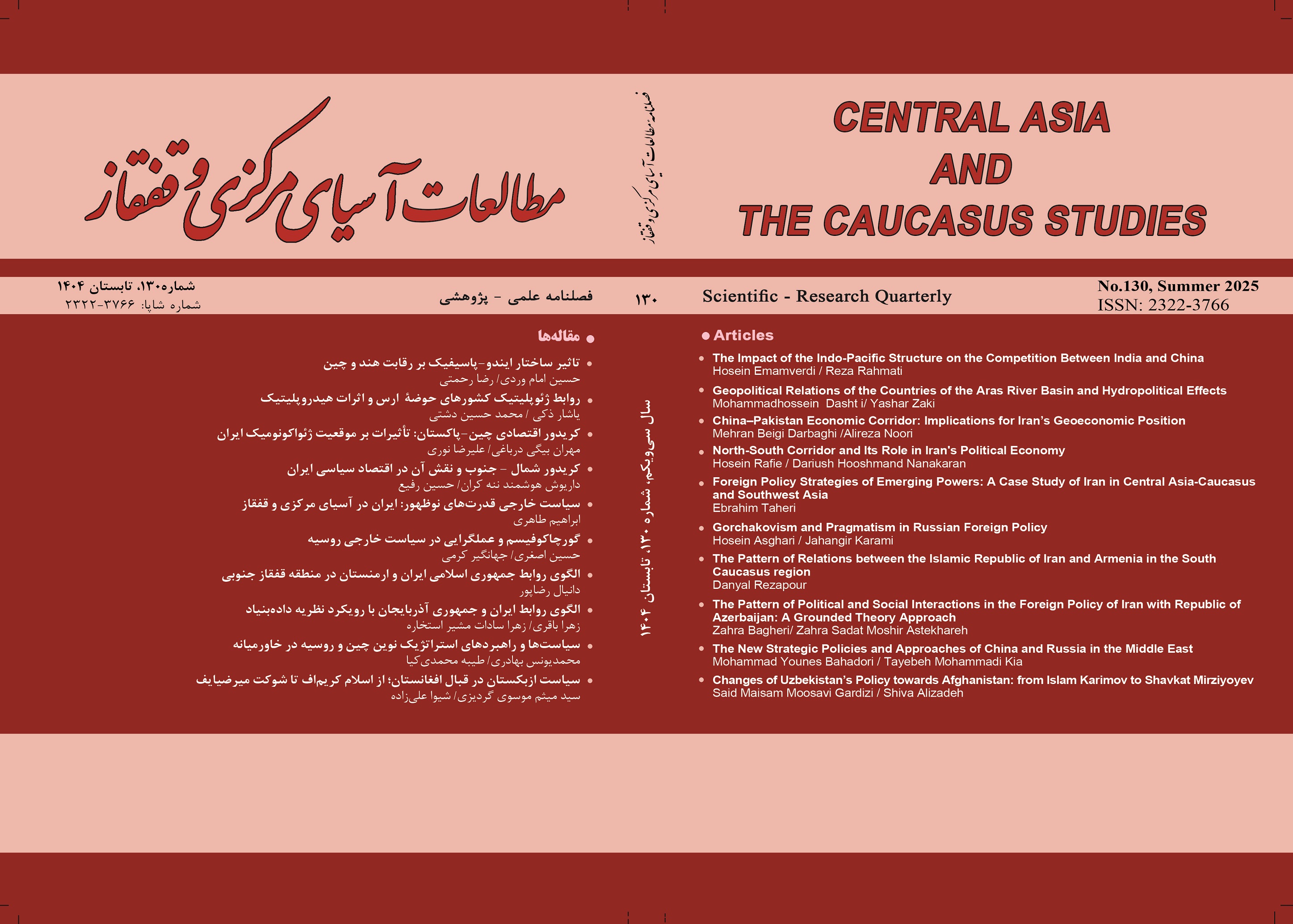
Russia's foreign policy has been significantly shaped by the concept of pragmatism throughout its history, particularly in recent decades. This article seeks to provide a clearer explanation of how this pragmatism can be analyzed in the conduct of Russian statesmen. The central question posed is: how does "Gorchakovism" demonstrate the dimensions of Russian pragmatism in historical and empirical contexts? The hypothesis advanced here is that the restoration of Russia's international status after its defeat in the Crimean War (1853–1857) and the Treaty of Paris, achieved through a step-by-step diplomatic approach and the effective utilization of opportunities within Europe's geopolitical environment, established Gorchakov as a historical emblem of Russian pragmatism. To examine this hypothesis, the authors employ the theory of pragmatism in foreign policy and a qualitative analysis of historical texts, political literature, and Russia's international developments. The primary finding of this article is that in the realm of international politics, national interests can only be effectively pursued through pragmatic, calculated, and incremental diplomacy. Furthermore, abstract ideals, unless they possess tangible applicability, risk leading nations and states toward collapse and failure.
Asghari, H., & Karami, J. (2025). Gorchakovism and Pragmatism in Russian Foreign Policy. Central Asia and The Caucasus Journal, 31(130), 147-170. https://doi.org/10.22034/ca.2025.729395
MLA
Asghari, H., & Karami, J. "Gorchakovism and Pragmatism in Russian Foreign Policy", Central Asia and The Caucasus Journal, 31, 130, 2025, 147-170. doi: 10.22034/ca.2025.729395
HARVARD
Asghari H., Karami J. (2025). 'Gorchakovism and Pragmatism in Russian Foreign Policy', Central Asia and The Caucasus Journal, 31(130), pp. 147-170. doi: 10.22034/ca.2025.729395
CHICAGO
H. Asghari & J. Karami, "Gorchakovism and Pragmatism in Russian Foreign Policy," Central Asia and The Caucasus Journal, 31 130 (2025): 147-170, doi: 10.22034/ca.2025.729395
VANCOUVER
Asghari H., Karami J. Gorchakovism and Pragmatism in Russian Foreign Policy. Central Asia and The Caucasus Journal. 2025;31(130):147-170 (In Persian). doi: 10.22034/ca.2025.729395