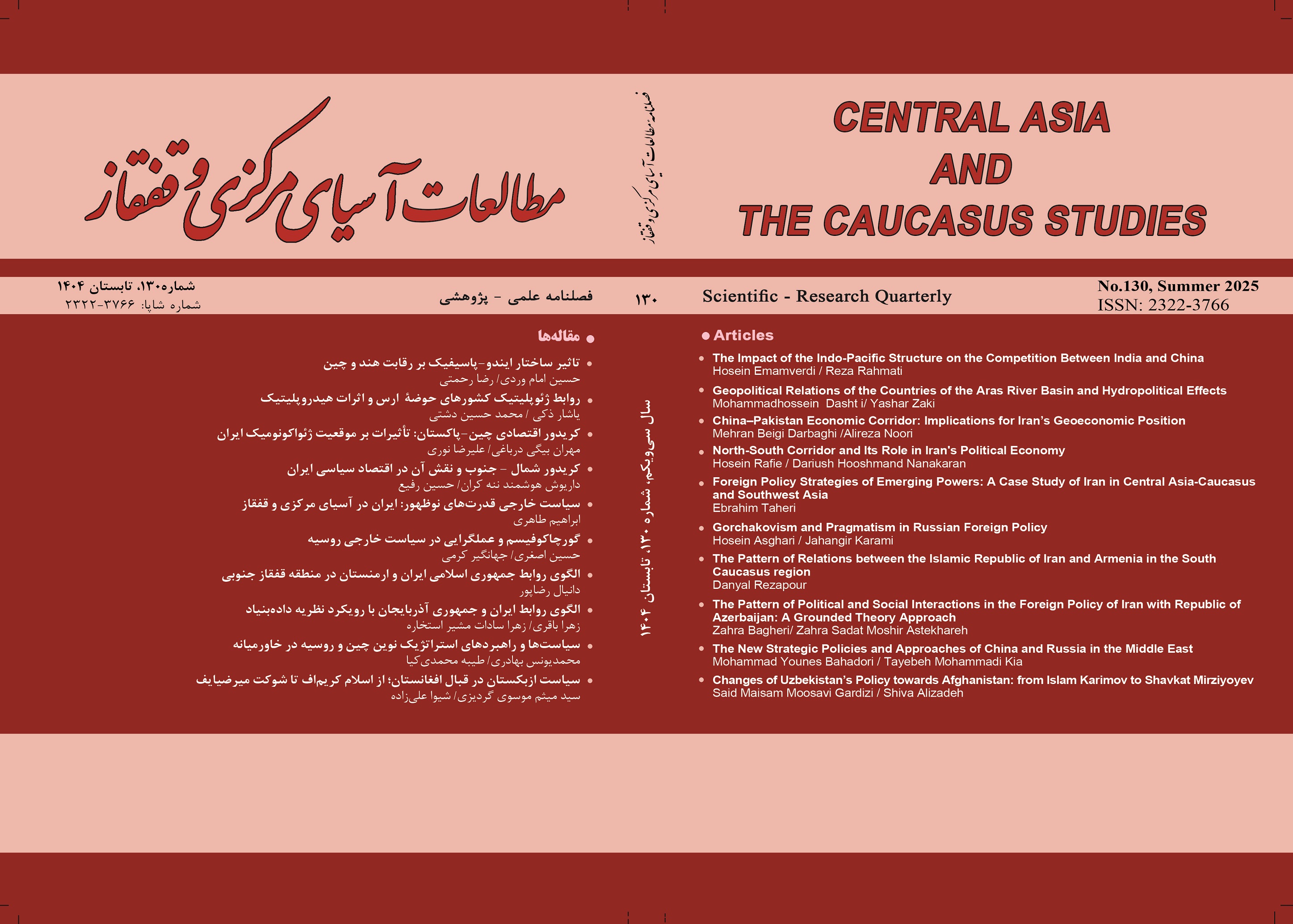
Today, the role of emerging powers in the Middle East is very important in the framework of global politics and influence in the region. China and Russia, as two countries with unique capabilities in the field of politics and economy, have been able to strengthen their influence in this region. This research examines the new strategic policies of these two powers in the Middle East. The main question of this research is as follows; What strategies have Russia and China used to increase and strengthen their influence in the Middle East? Which one has been more successful? The hypothesis of the research is that Russia and China by focusing on three main strategies namely; Strengthening and developing economic relations, seeking regional leadership through increasing political presence and influence and positive image of themselves in the region are trying to increase their influence and influence in the Middle East. This research tries to investigate this issue with descriptive analytical method and using library sources.
bahadori, M. Y., & Mohammadi Kia, T. (2025). Examining the New Policies & Strategies of China & Russia in the Middle East. Central Asia and The Caucasus Journal, 31(130), 223-248. https://doi.org/10.22034/ca.2025.729398
MLA
bahadori, M. Y., & Mohammadi Kia, T. "Examining the New Policies & Strategies of China & Russia in the Middle East", Central Asia and The Caucasus Journal, 31, 130, 2025, 223-248. doi: 10.22034/ca.2025.729398
HARVARD
bahadori M. Y., Mohammadi Kia T. (2025). 'Examining the New Policies & Strategies of China & Russia in the Middle East', Central Asia and The Caucasus Journal, 31(130), pp. 223-248. doi: 10.22034/ca.2025.729398
CHICAGO
M. Y. bahadori & T. Mohammadi Kia, "Examining the New Policies & Strategies of China & Russia in the Middle East," Central Asia and The Caucasus Journal, 31 130 (2025): 223-248, doi: 10.22034/ca.2025.729398
VANCOUVER
bahadori M. Y., Mohammadi Kia T. Examining the New Policies & Strategies of China & Russia in the Middle East. Central Asia and The Caucasus Journal. 2025;31(130):223-248 (In Persian). doi: 10.22034/ca.2025.729398