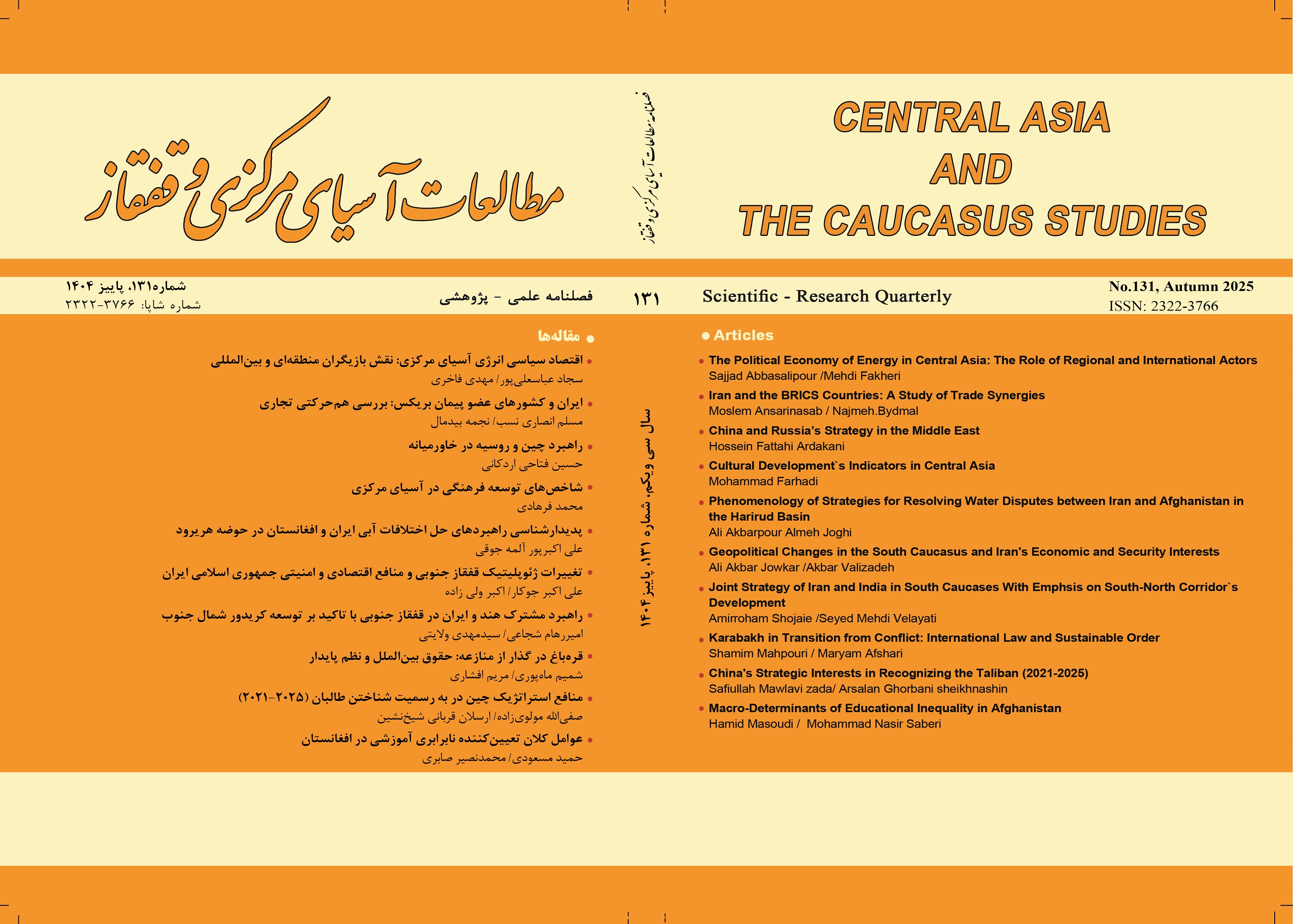
Document Type : Research Paper
Authors
1
Assistant Professor, Department of Sociology, Faculty of Literature and Humanities, University of Birjand, Birjand, Iran
2
Social Sciences Research, University of Birjand
Abstract
Education, as a fundamental human right and an essential tool for social and economic advancement, plays a vital role in the development of societies. However, educational inequalities, particularly in developing countries like Afghanistan, pose serious challenges to achieving development and social justice. In Afghanistan, economic, social, cultural, and geographical factors play a major role in creating educational inequalities. Poverty, lack of financial resources, and inadequate educational infrastructure in rural areas, along with negative cultural attitudes towards girls' education, and political instability, are among the main obstacles facing the country's educational system. Statistics show that more than 3.7 million Afghan children are deprived of education, 60% of whom are girls. Additionally, many schools in remote areas lack qualified teachers and adequate educational facilities. This research examines and analyzes the factors affecting educational inequality in Afghanistan, using documentary and secondary analysis methods for data collection. Data were gathered from various sources, including the Afghanistan Statistical Center, Ministry of Education, and Ministry of Higher Education. The findings indicate that economic poverty, lack of access to proper educational infrastructure, and cultural barriers such as conservative attitudes towards girls' education are key factors contributing to educational inequality in the country. Additionally, geographical disparities negatively impact access to and the quality of education, particularly in rural areas where educational facilities are limited. This study emphasizes the need for careful planning and the implementation of comprehensive and cohesive educational policies in Afghanistan.
Keywords
Subjects